

Villa Orlando
2.000.000 euro
Carmignano lies among the gentle hills of Montalbano, in the heart of Tuscany and approximately 30 minutes from Florence, in an area that embodies many of the region’s most distinctive features: vineyards and olive groves, woodland, ancient villages, historic villas and sweeping views towards Florence, Prato and Pistoia.
It is a land of very ancient origins, with important Etruscan remains and strong historical ties to the Medici family, reflected in the nearby Medici Villa La Ferdinanda in Artimino, a UNESCO World Heritage Site. Carmignano is also renowned for its long-established winemaking tradition and for Carmignano DOCG, one of Tuscany’s most historic and representative wines.
An authentic and private setting, immersed in the Tuscan countryside yet strategically located close to Florence and the region’s principal art cities.
HISTORY
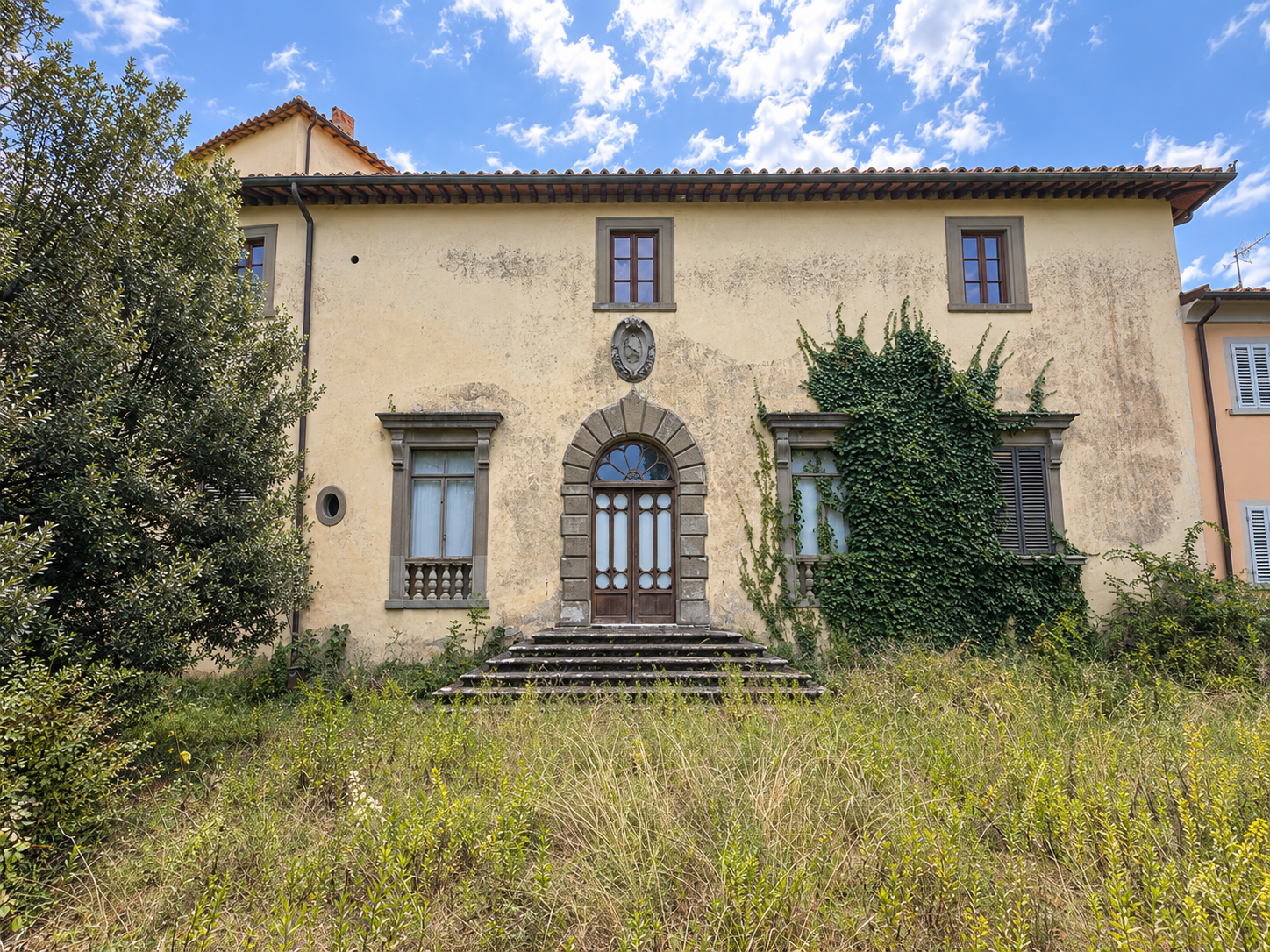
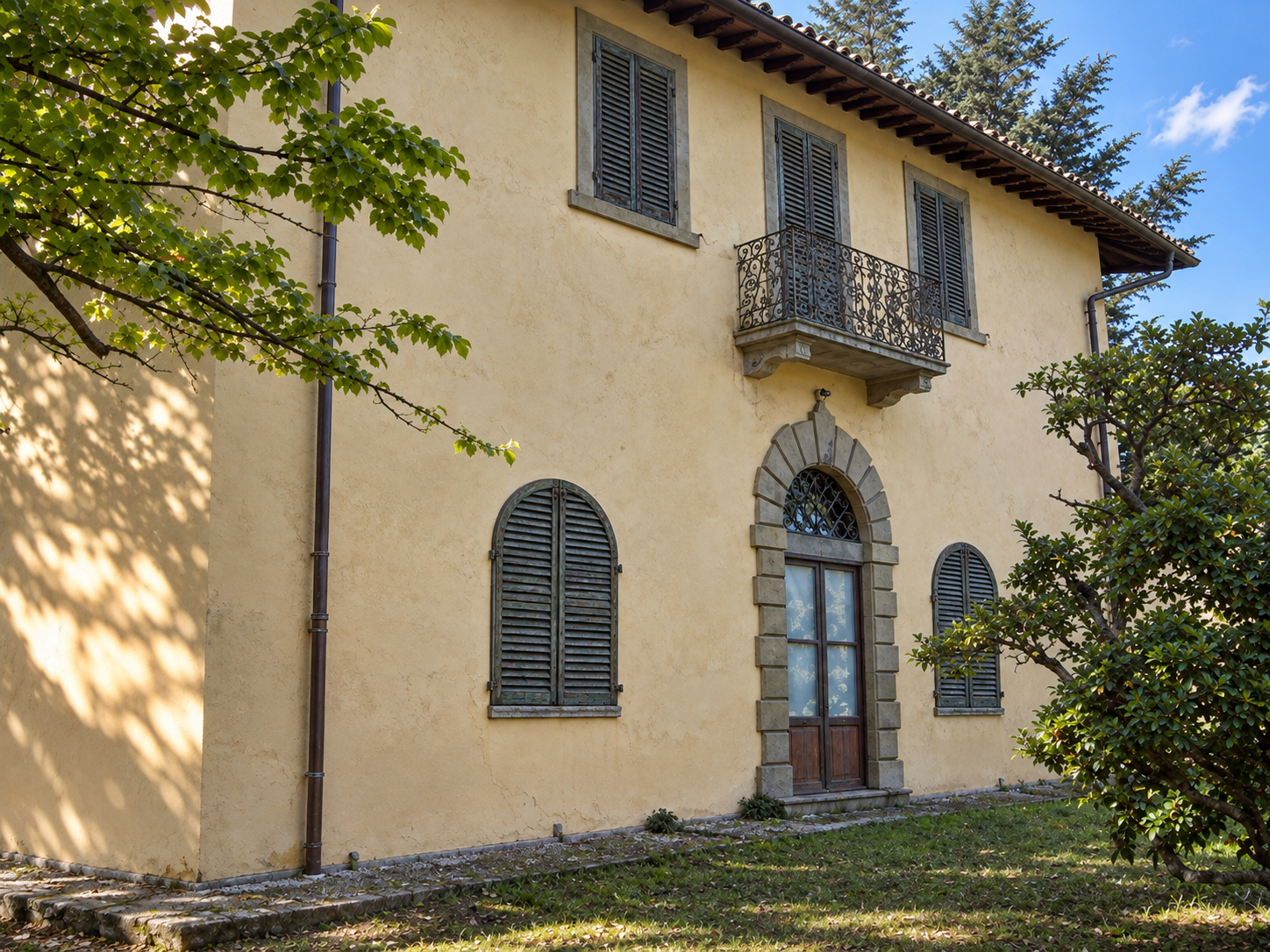
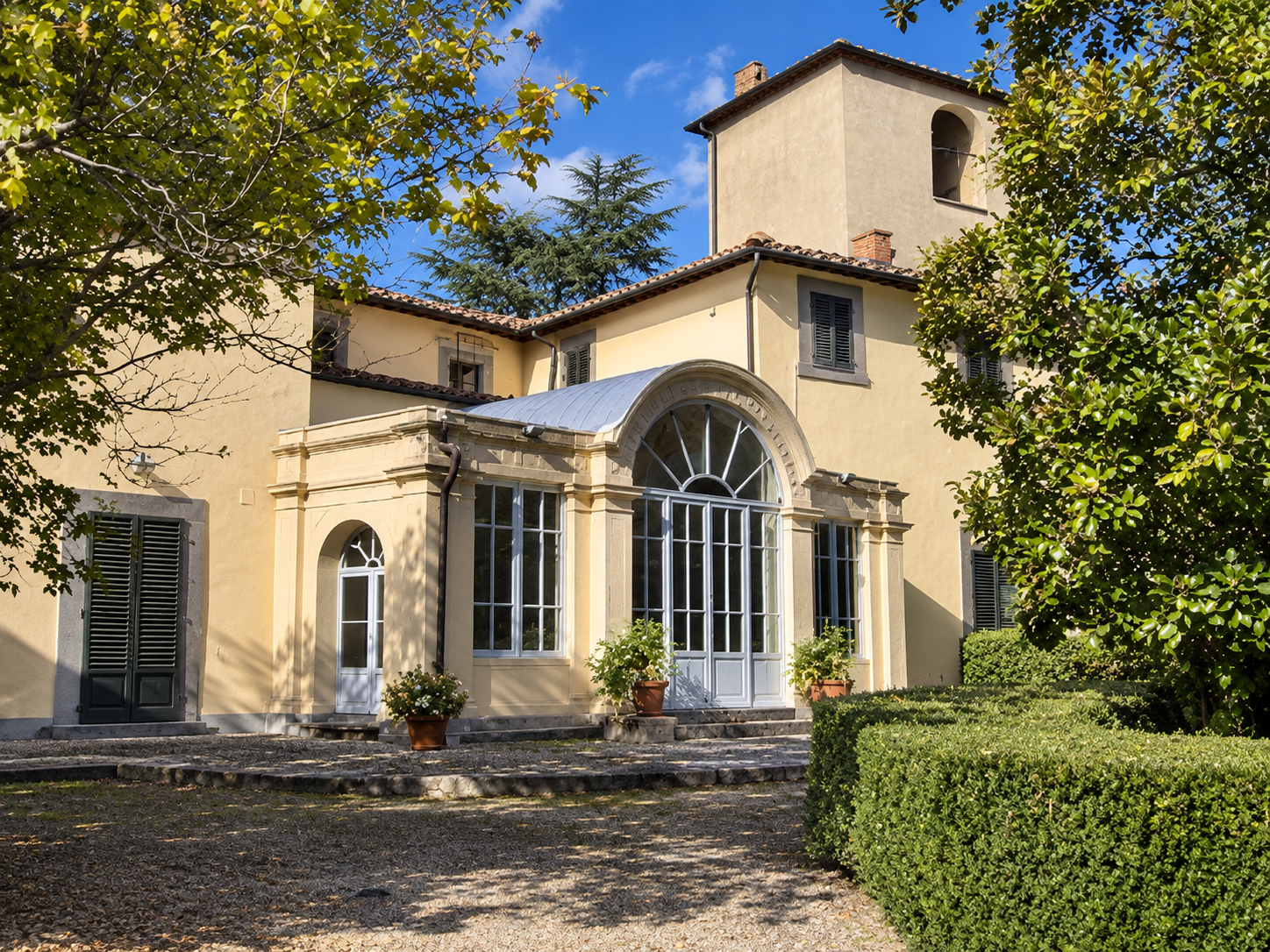
Set in a commanding position on the hills of Carmignano, Villa Castello is a historic residence of remarkable charm, whose origins are believed to date back to the medieval period. The present complex is thought to be the result of successive transformations, including a reconstruction during the 18th century over much older structures, followed by significant decorative works carried out in the second half of the 19th century.
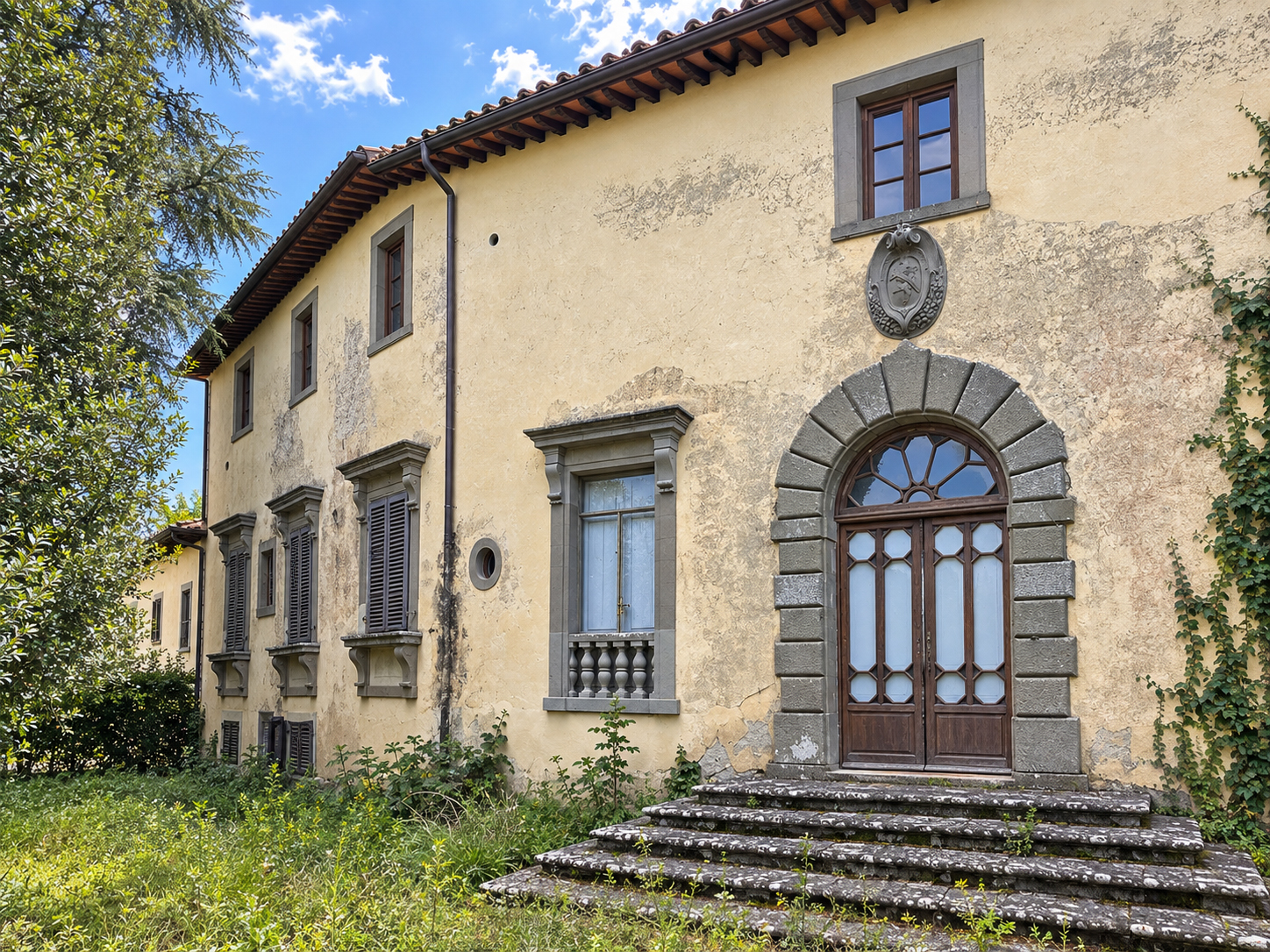
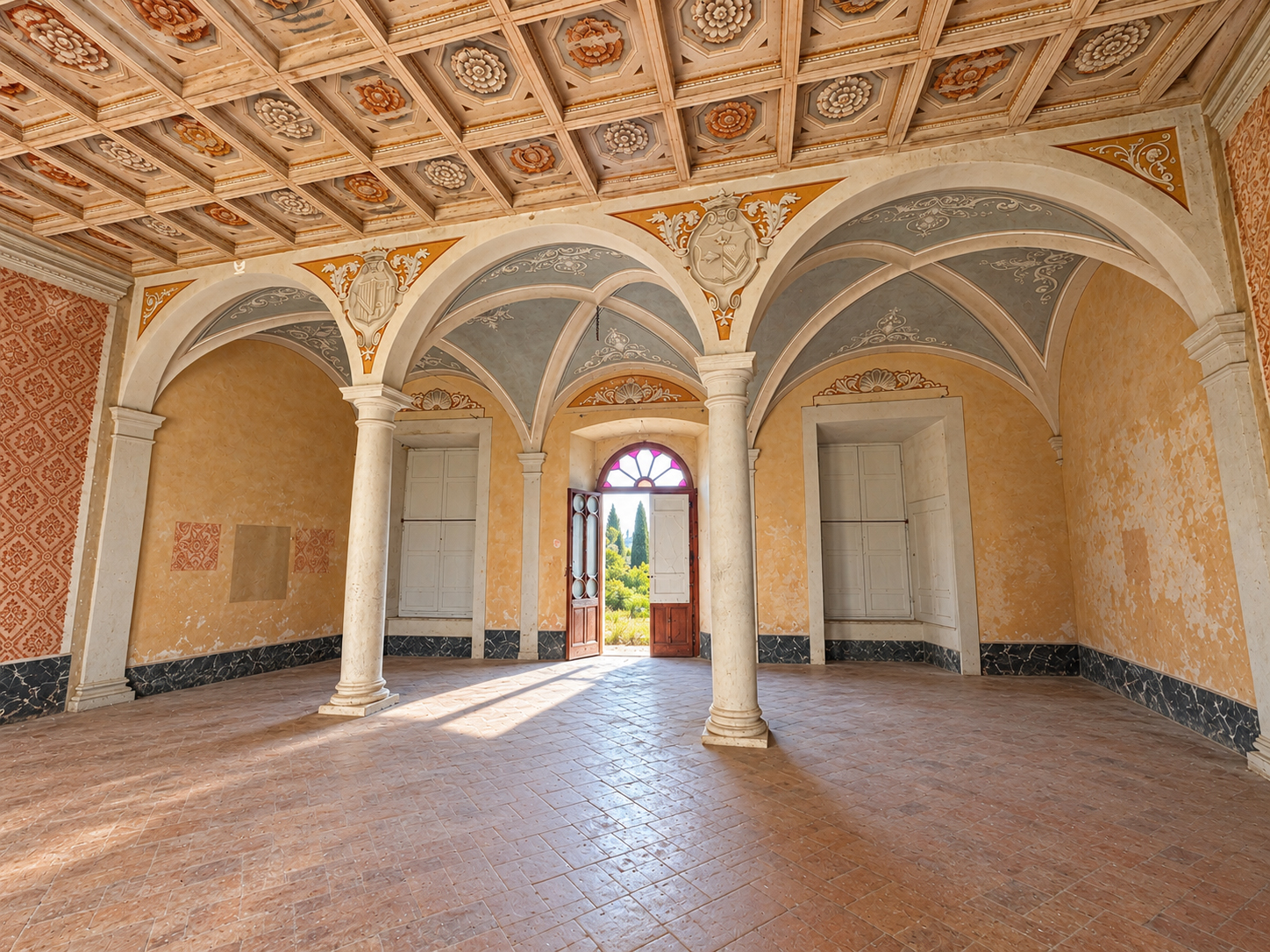
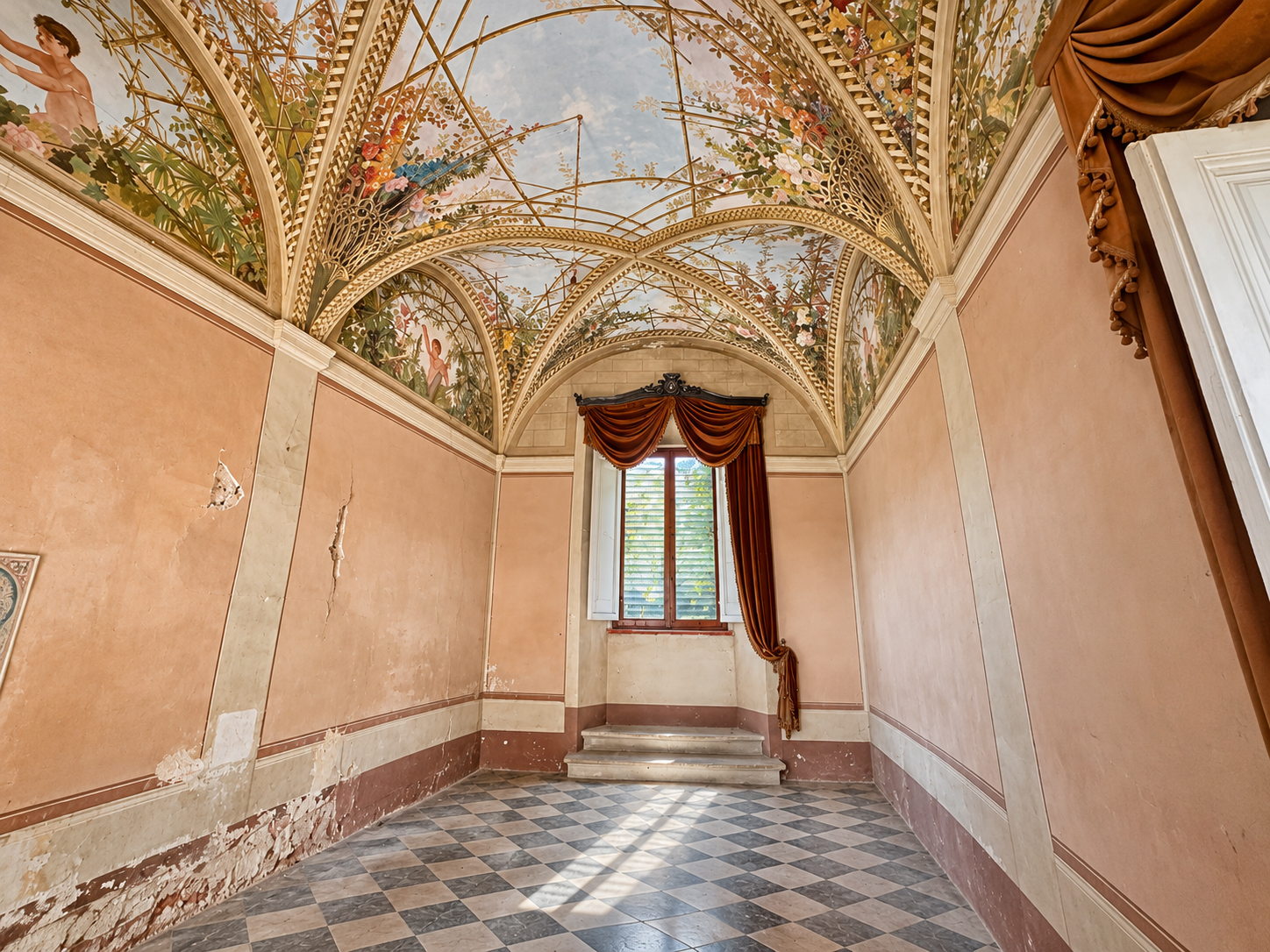
Tradition also links the villa to Vittorio Emanuele II, King of Italy during the years when Florence was the capital of the Kingdom, who is said to have visited the property during his stays in Tuscany. Coats of arms, decorative features, grand frescoed rooms and formal reception spaces still bear witness to the noble character of the residence and to the different periods that have shaped its history.

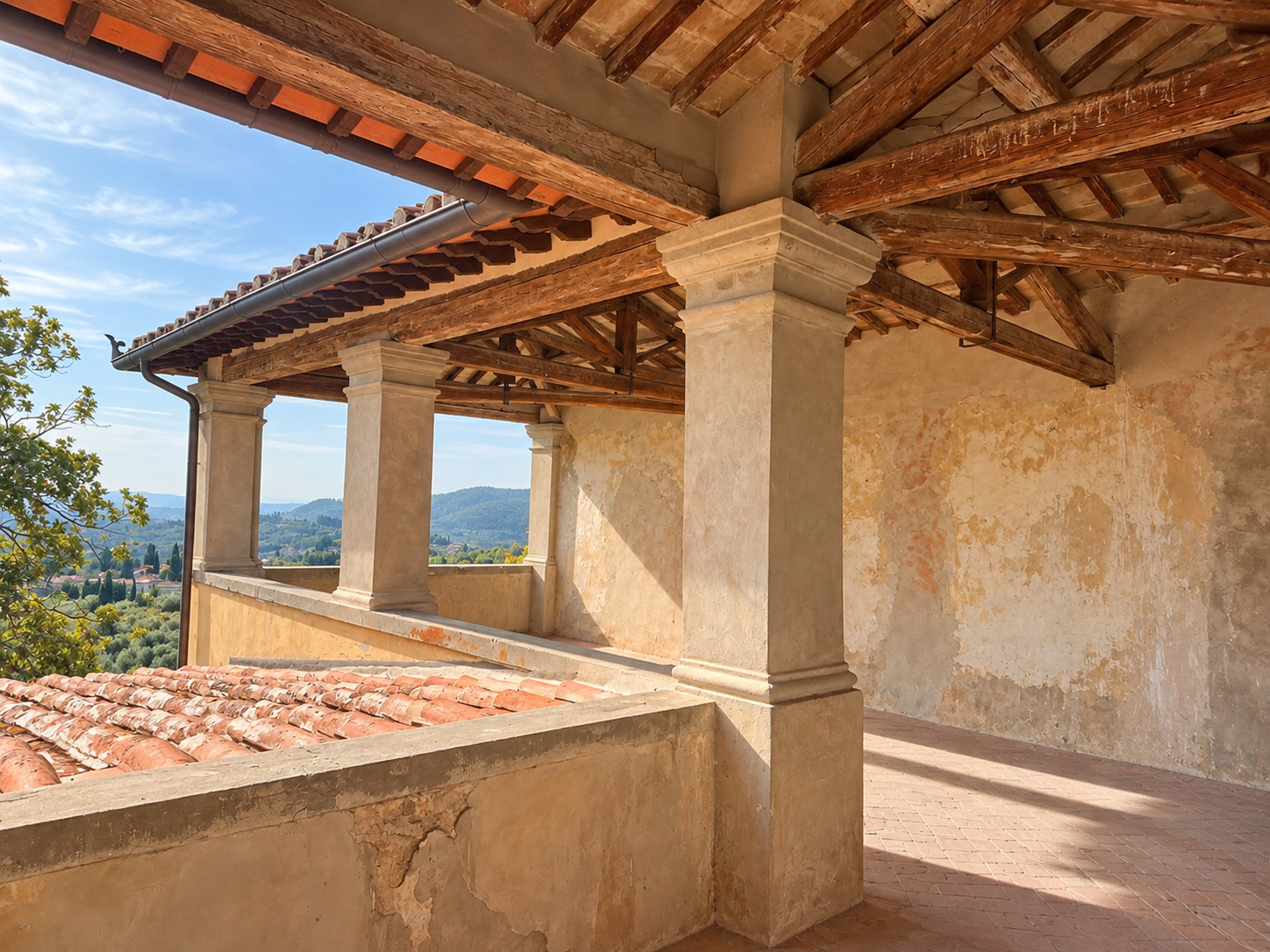
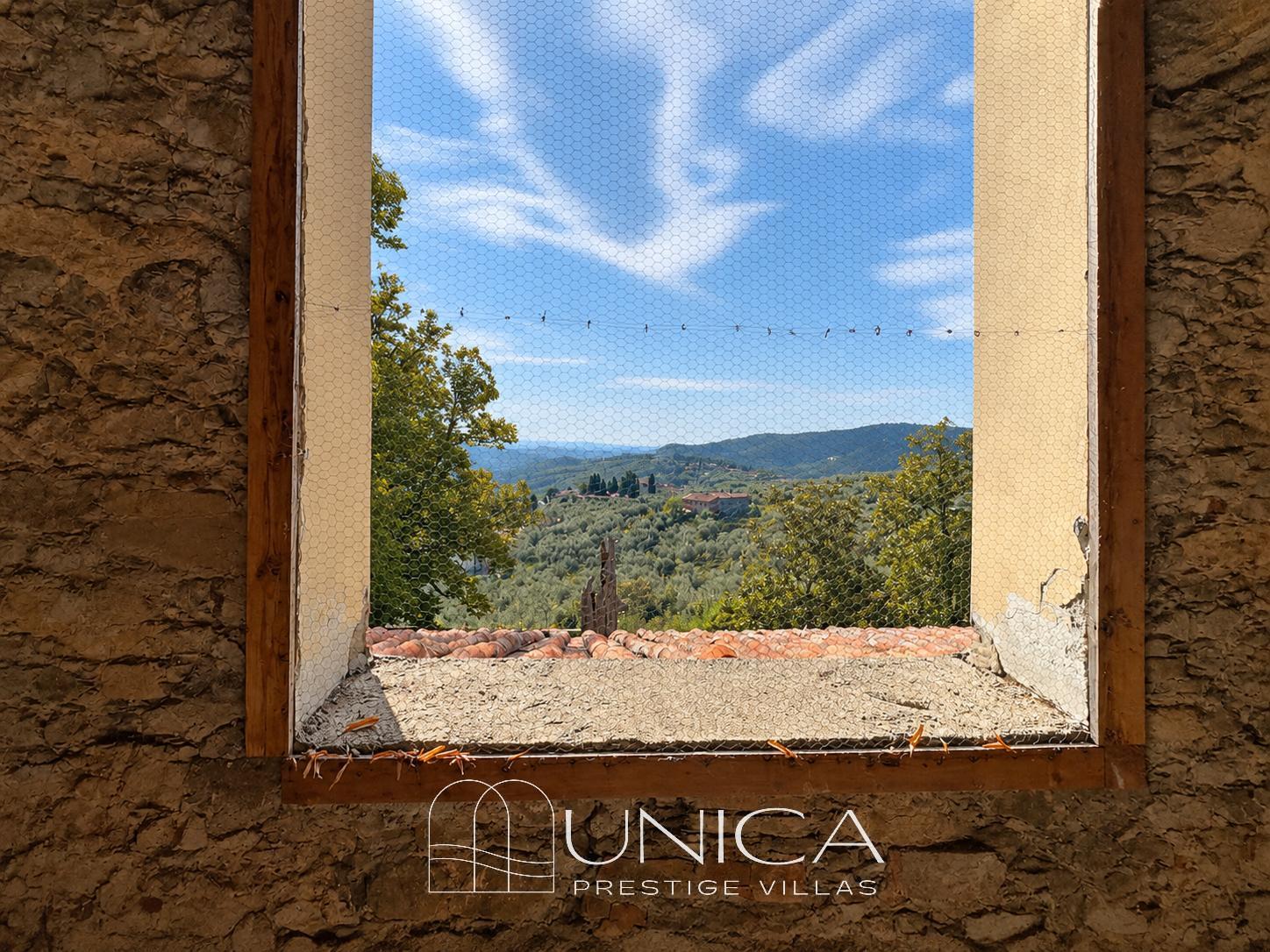
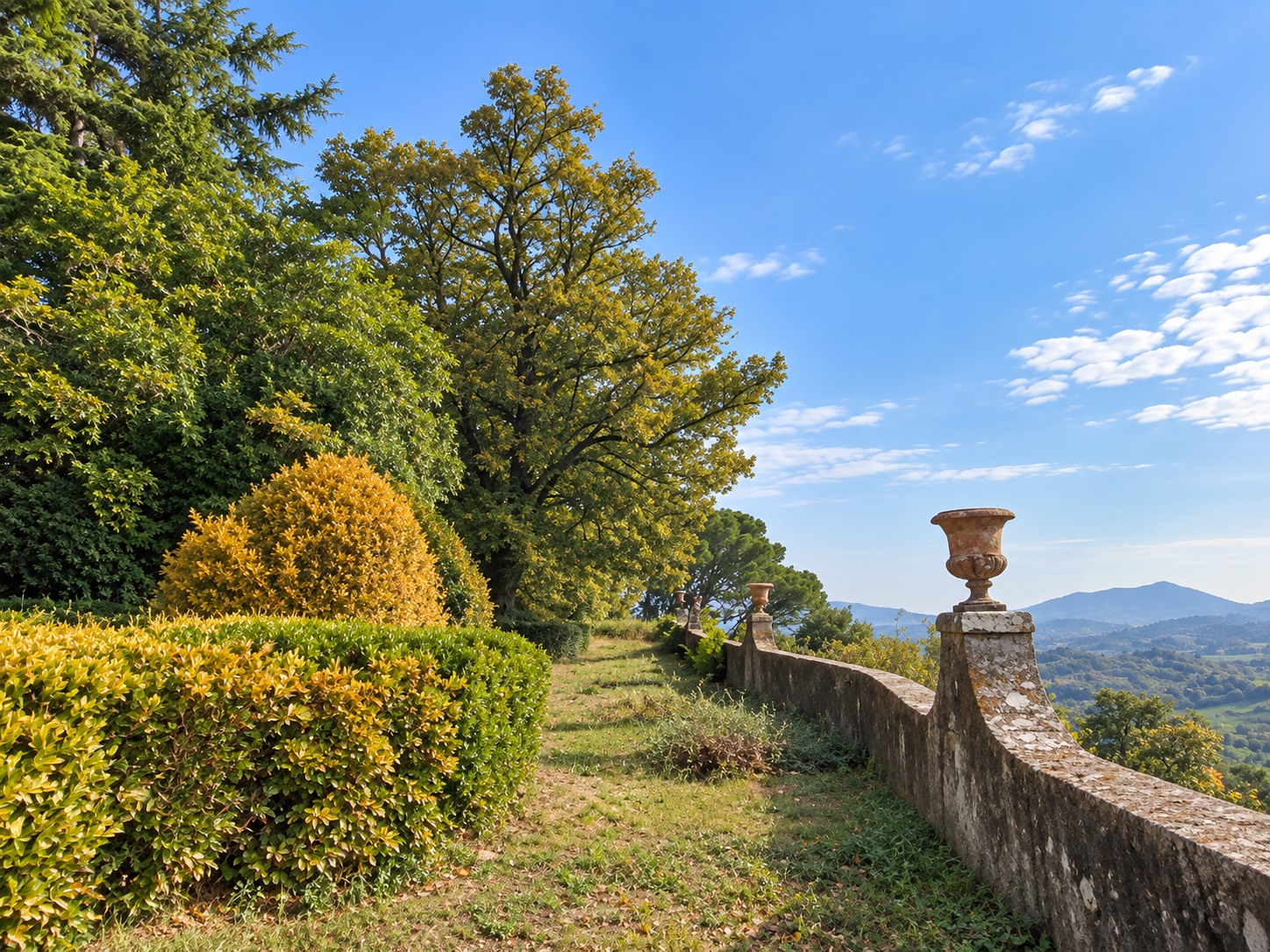
The property extends over approximately 1,400 sqm and is surrounded by a park of around 6,000 sqm, enjoying a particularly panoramic position overlooking the plains of Florence, Prato and Pistoia. The garden retains the layout and atmosphere of an historic Tuscan residence, with mature trees, hedges, pathways, stone features and a charming belvedere area overlooking the surrounding landscape.
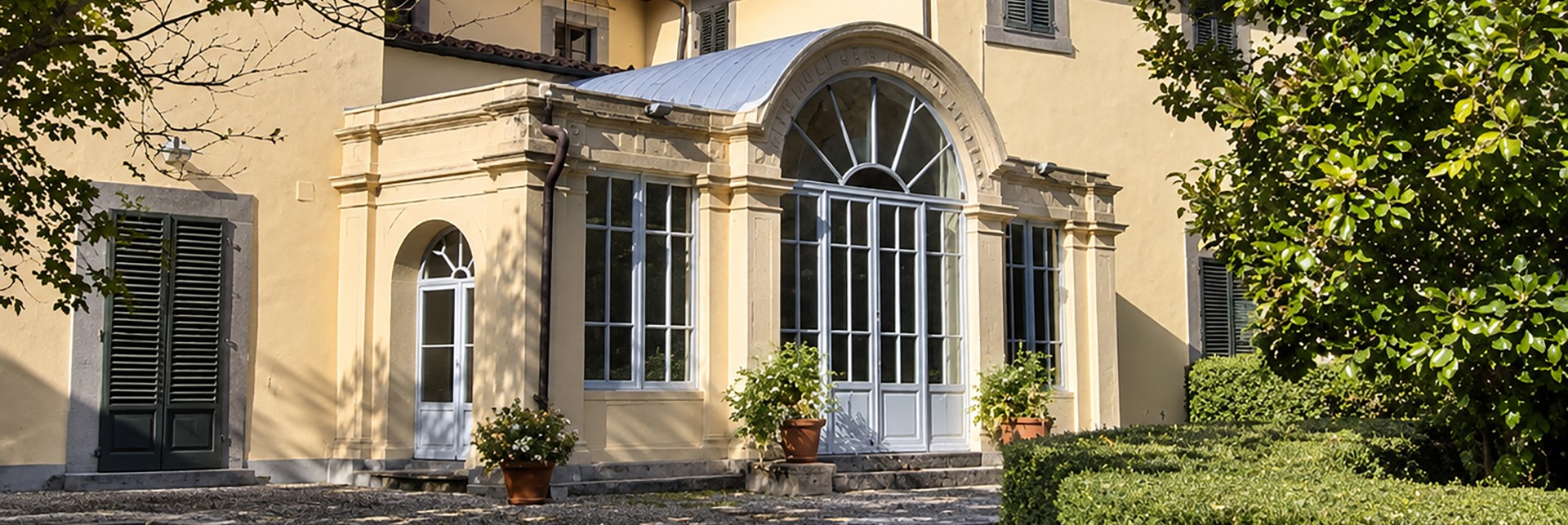
Of particular interest is the winter garden, characterised by large arched glazed openings that create a striking connection between the interiors and the surrounding greenery. Important structural works have already been carried out, including the complete replacement of the roof covering and the restoration of the timber roof structure.

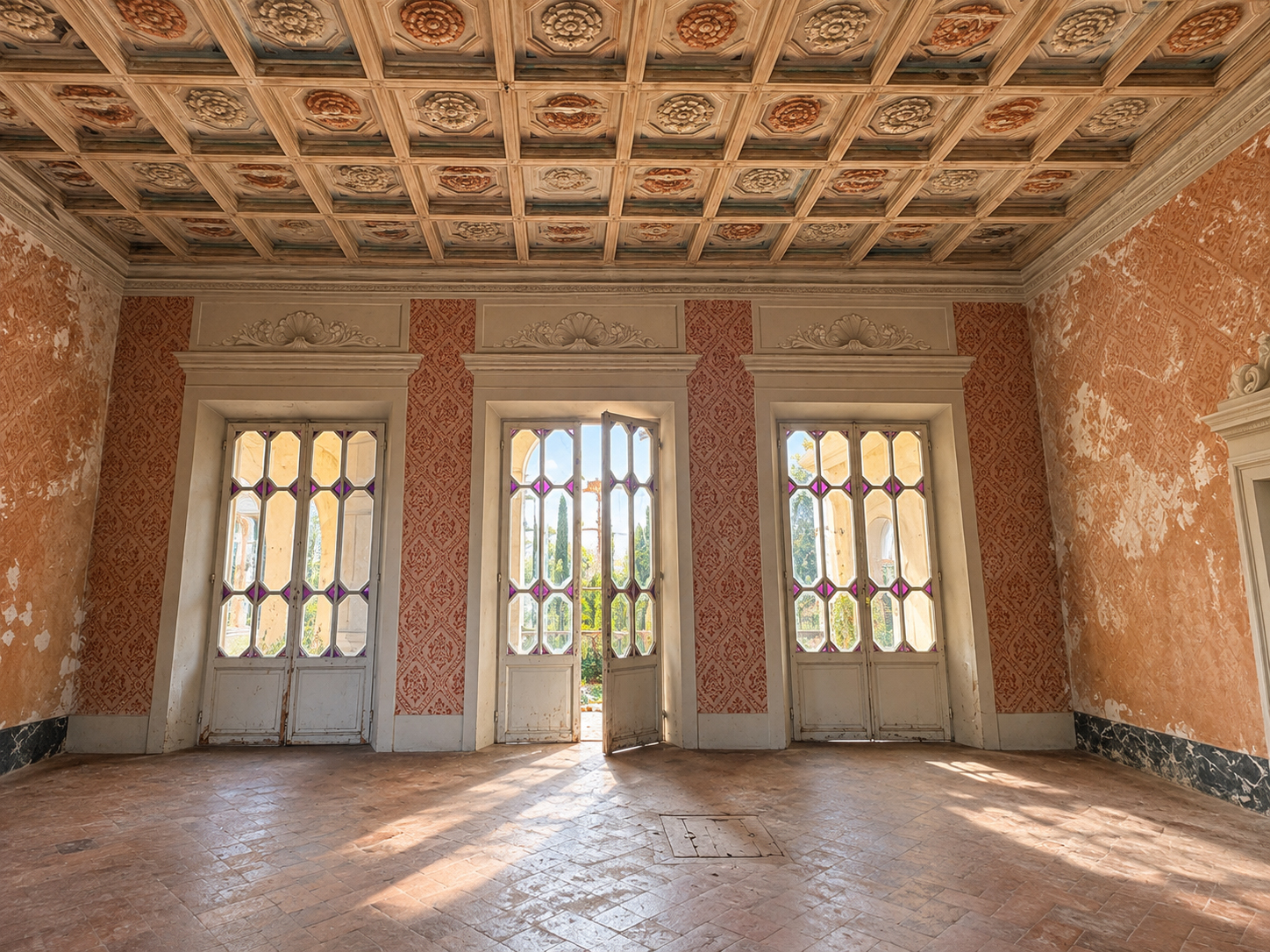
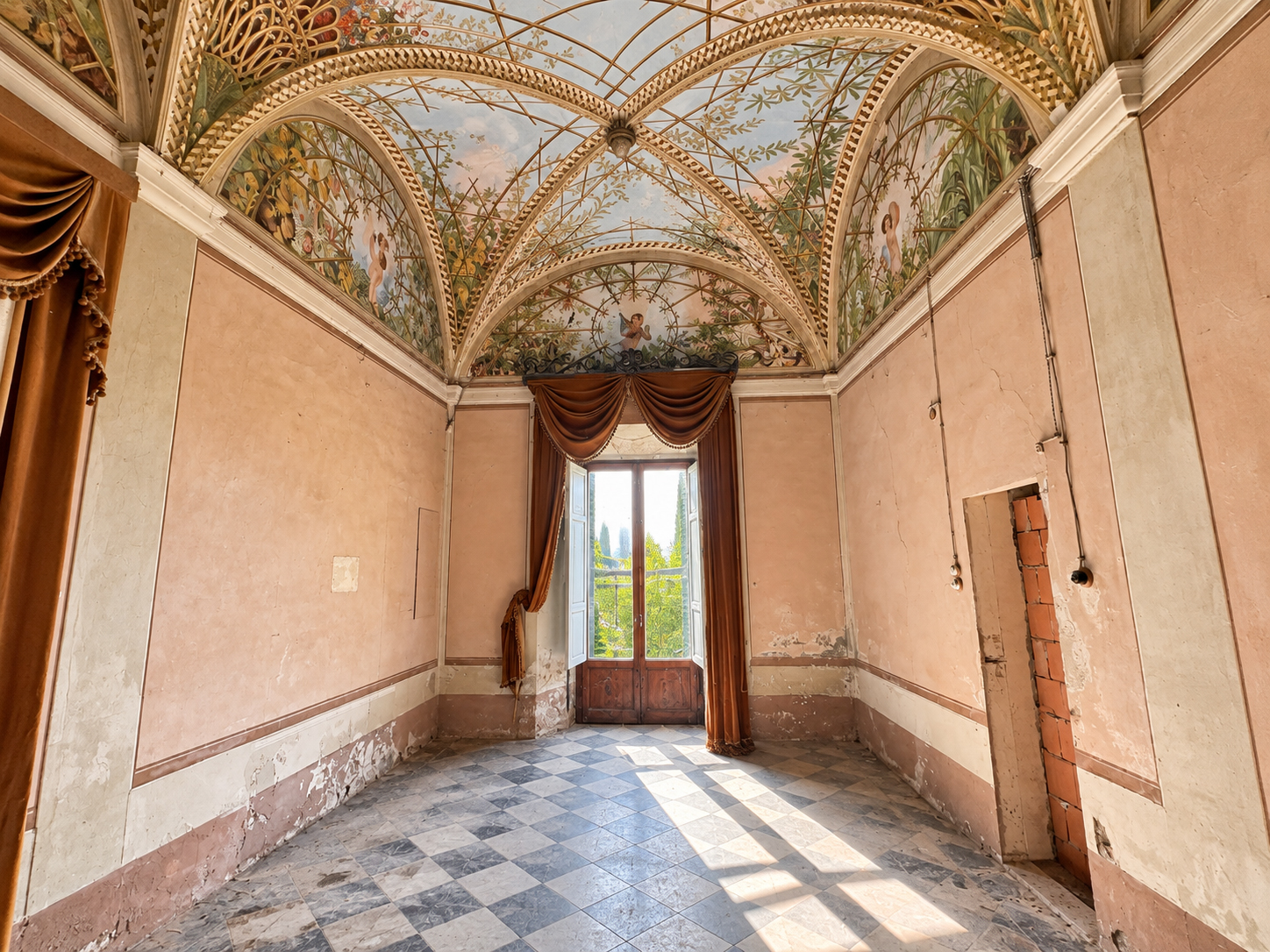
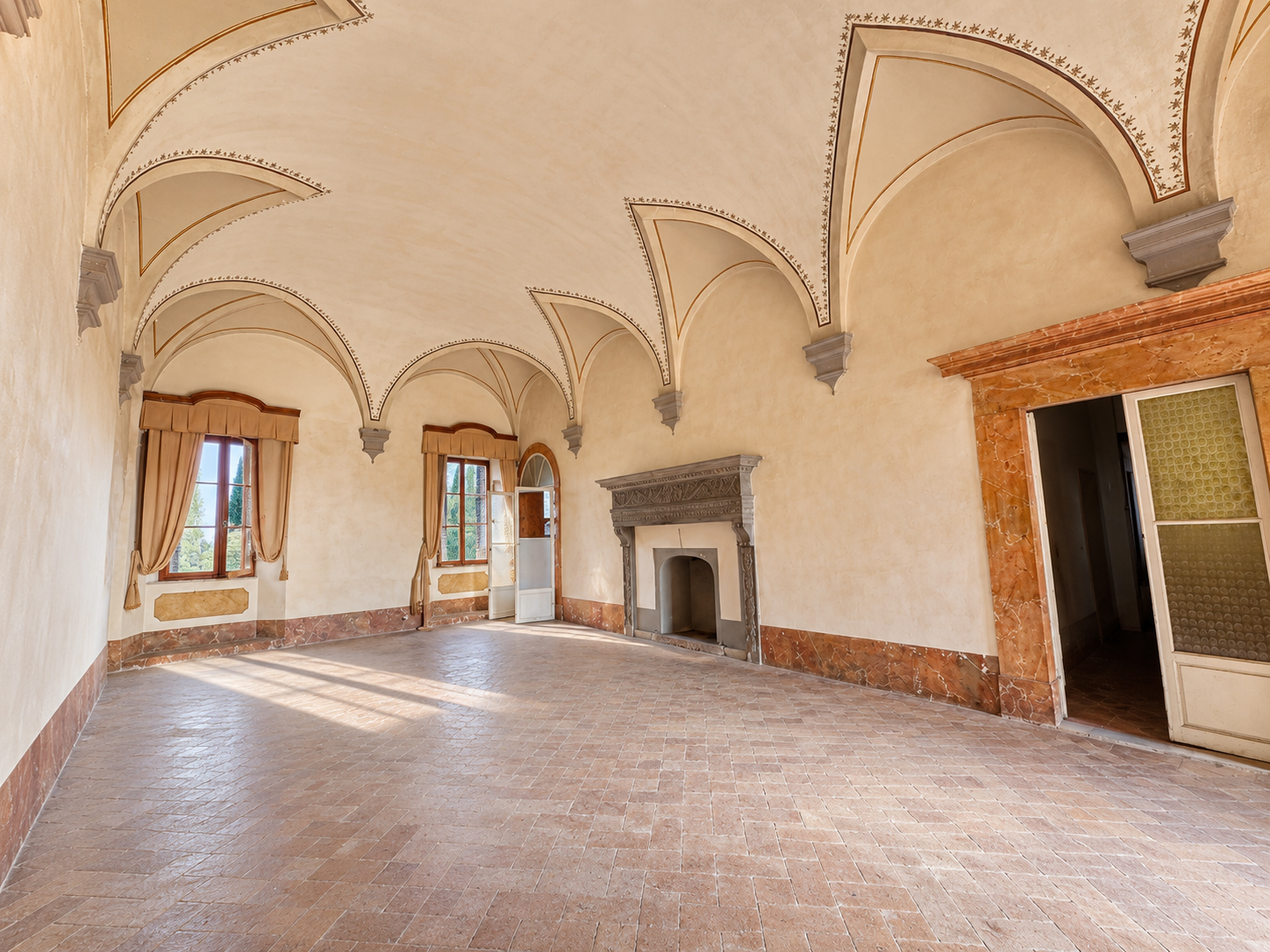
The interiors retain an extraordinary sequence of noble reception rooms, frescoed spaces, exceptionally high vaulted ceilings, decorated ceilings, coats of arms and original architectural details, all of which are now in need of restoration but still clearly convey the historical importance and distinctive character of the residence.
The ground floor, measuring approximately 500 sqm, represents the most monumental part of the villa: large reception rooms open onto the gardens and loggias, together with the charming winter garden.
The upper floor, extending over more than 570 sqm, comprises numerous rooms that lend themselves to a new internal layout, including the possible creation of bedrooms with en-suite bathrooms as part of a potential hospitality project, in addition to the large panoramic loggia and the tower.
The basement level includes approximately 300–350 sqm of cellars, also accessible via a ramp. The entire complex requires a substantial programme of conservative restoration, yet its present condition still allows the original materials, decorative features and architectural proportions to be appreciated with remarkable authenticity, providing an exceptional foundation for the future restoration and redevelopment of the property.

Exterior
-
Internal Parking
Set among the gentle hills of Montalbano, between Florence, Prato and Pistoia, Carmignano brings together some of the most authentic and captivating elements of the Tuscan countryside: vineyards, olive groves, woodlands, historic villas and small villages surrounded by a remarkably well-preserved landscape.
This is a land deeply connected to the history of the Medici family, who chose these hills for their residences and estates. Among the most important examples is Villa Medicea La Ferdinanda in Artimino, also known as the Villa of the Hundred Chimneys, designed by Bernardo Buontalenti at the end of the 16th century and today part of the UNESCO World Heritage Site of the Medici Villas and Gardens.
The landscape is quintessentially Tuscan: winding roads through vineyards and olive groves, cypress trees, historic residences and rolling hills opening towards the plains of Florence, Prato and Pistoia. Life here still moves at a peaceful pace, while the main art cities and essential services remain within easy reach.
Carmignano also boasts one of Tuscany’s oldest wine traditions. As early as 1716, Grand Duke Cosimo III de’ Medici included the area among the wine-producing territories worthy of official protection, anticipating the modern concept of controlled designation of origin by centuries. Today, Carmignano DOCG remains one of the most distinctive wines of the area.
Historic wineries, agricultural estates and olive oil producers offer the opportunity to discover a more authentic side of Tuscany, shaped by local products, traditions and cuisine closely connected to the seasons and the land.
Carmignano is ideal for those seeking peace and privacy without feeling isolated: an elegant and secluded countryside setting, surrounded by nature yet strategically positioned for easy access to Florence, Prato and many of Tuscany’s most important destinations.
SURROUNDINGS
Just a few kilometres away lies Artimino, a small medieval village set on the hills of Montalbano. Its narrow streets, ancient gateway tower and views across the surrounding countryside preserve the charm of a traditional Tuscan hill town.
The area also preserves important traces of Etruscan civilisation, including the monumental tombs of Comeana, the Prato Rosello necropolis and the archaeological site of Pietramarina, all part of the Carmignano Archaeological Park.
Nearby Poggio a Caiano is home to its celebrated Medici Villa, while Prato, with its historic centre, museums and long textile tradition, can be reached in just a short drive.
Travelling through the hills of Montalbano, visitors can continue towards Vinci, the birthplace of Leonardo da Vinci, while Florence is close enough for a day dedicated to art, shopping and gastronomy.
Pistoia and Lucca are also within easy reach, offering further opportunities to explore Tuscan art cities, historic towns and beautiful landscapes.
From wine tastings and walks through vineyards and olive groves to Medici villas, historic villages and art cities, Carmignano offers a more intimate side of Tuscany, where history, landscape and authenticity come together just a short distance from the region’s main cultural centres.
Request information
Fill out the form to request availability in your preferred period. If you have other needs, write to us and we will find the perfect solution for you!
